


- Small businesses are moving from manual reviews to smart performance management systems because real-time feedback and automated tracking improve productivity and accountability.
- Only 31% of U.S. employees were engaged in 2024, making real-time goal tracking and continuous feedback critical for preventing disengagement and turnover.
- The top 8 performance management systems for small companies include Synergita, AssessTEAM, HiBob, PerformYard, Lattice, Effy AI, BambooHR, and 15Five.
- A checklist explains the key factors to consider when selecting performance management software, including goal alignment, continuous feedback, automated reviews, analytics, integrations, and compliance (GDPR, CPRA).
- Synergita PMS stands out with cost-effective pricing, customizable workflows, continuous feedback, and secure data policies, making it one of the best performance management systSynergita PMS stands out with cost-effective pricing, customizable workflows, continuous feedback, and secure data policies, making it one of the best performance management systems for small companies in 2027.ems for small companies in 2026.
Are you tracking your team’s performance effectively to ensure it drives business growth? According to Gallup’s State of the American Manager report, employees who receive strengths-based feedback are 8% to 18% more productive. This is why small businesses are shifting from manual review processes to smart, data-driven performance management systems (PMS).
With automated reminders, real-time feedback, and transparent goal tracking, performance management software helps leaders improve productivity, strengthen engagement, and establish accountability across roles and departments.
However, with numerous options available, which PMS should you choose for your business in 2026? In this blog, we will explore the top performance management systems for small business, why you need them, and a checklist to select the right one for your business.
| Table of Contents 1. What are the top performance management systems for small businesses 2. Why does your small business need a performance management system 3. Checklist when selecting a performance management system for small businesses 4. Final takeaway 5. Frequently asked questions |
What are the top performance management systems for small businesses?
The top performance management systems for small companies include Synergita PMS, AssessTEAM, HiBob, PerformYard, and more. Let’s look at them in detail.
| Tool | Key Features | Pricing |
| Synergita PMS | Customizable setup, SMART goals, automated reviews, simple dashboards, integration with HRIS tools | – Free trial for 7 days. – Paid plans start from $2/user/month |
| AssessTEAM | 3,000+ pre-built KPIs, mobile app, cloud security, and customized evaluations | Plans start from $2 per month |
| HiBob | Automated feedback cycles, progress tracking, goal setting, | Custom pricing based on requirements |
| PerformYard | Goal management, continuous feedback, analytics, customizable templates | $5-10/user/month |
| Lattice | Succession planning, check-ins, analytics, performance improvement plans | Custom pricing based on requirements |
| Effy AI | Reduces review time by 70%, improves feedback quality by 20–30%, advanced insights | Contact for custom pricing |
| BambooHR Performance Management System | Automates scheduling, reminders, and HR data integration | Contact for custom pricing |
| 15Five | Continuous feedback, HRIS integration, and quick setup | Plans start from $4/user/month |
1. Synergita
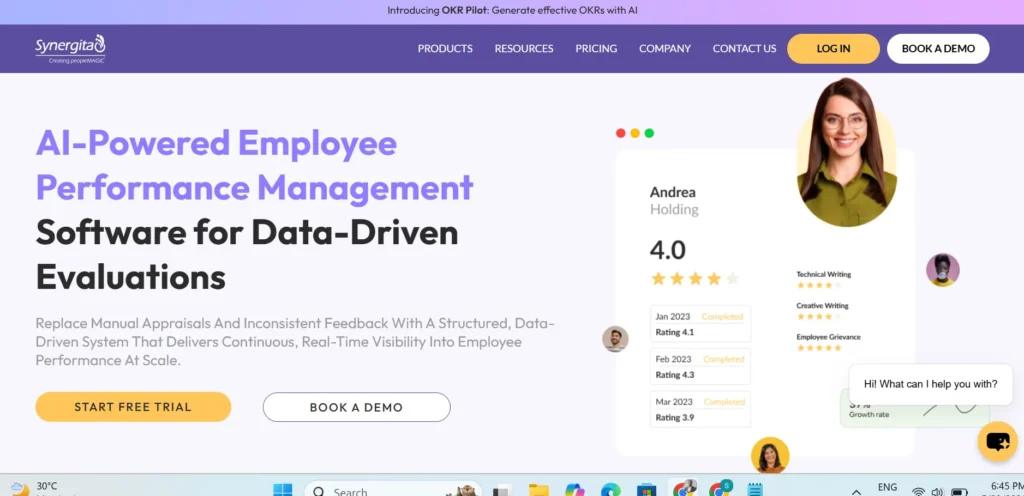
Synergita offers a very cost-effective performance management system for small business and fast-growing startups looking to establish goal setting, continuous feedback, reviews, and 360-degree feedback. Due to its features, such as a fully customizable setup, an intuitive, real-time dashboard to visualize trends, transparency, and unbiased performance reviews, users consistently rate Synergita highly for customer satisfaction.
What makes it ideal for small businesses:
- Cost-effective pricing, with plans starting at $0.35 per user per month, provides small businesses with access to advanced performance tools without a heavy investment.
- A simple and intuitive user interface designed for first-time users.
- Automated performance review workflows reduce HR overhead and support smaller teams.
- Built-in employee-engagement tools, such as rewards and recognition, that help smaller organizations build culture.
- Flexible goal-management, including SMART goals, ensures clarity and accountability in small teams.
Pros and Cons
| Pros | Cons |
| Flexible performance review workflows | User interface not very intuitive |
| Supports multiple review methods | Advanced features may need HR process alignment |
| Strong AI-powered analytics and reporting |
Pricing & Free Trial:
- A seven-day free trial
- Engage: $2/user/month (billed annually)
- Perform: $4/user/month (billed annually)
- Perform Plus: $7/user/month (billed annually)
Suggested Read: 4 Steps to Build a Continuous Feedback Culture
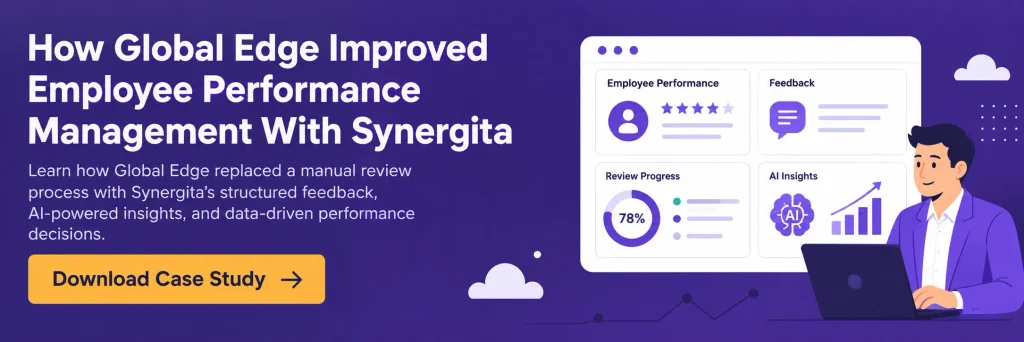
2. AssessTEAM
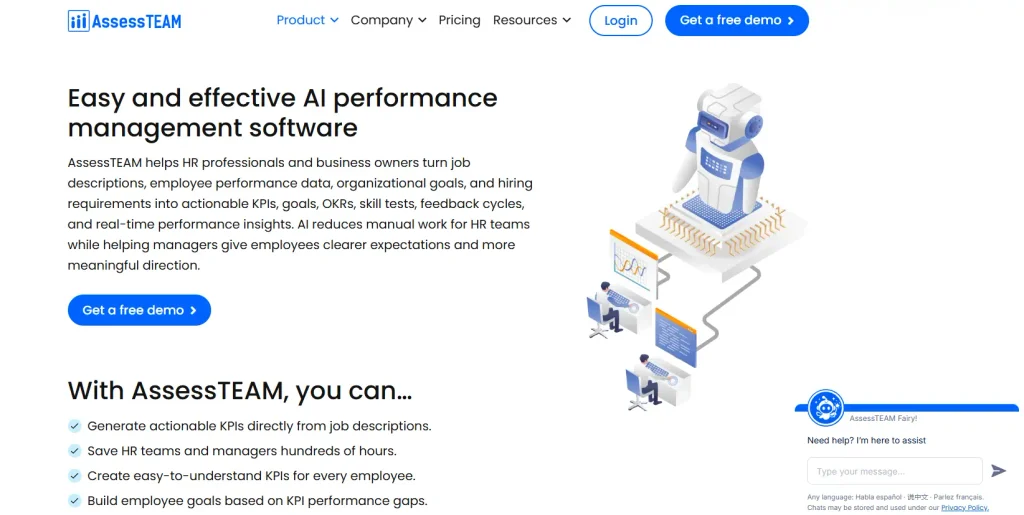
AssessTEAM is one of the best cloud-based employee performance management tools for small businesses, utilizing big data technologies to safeguard data both at rest and in transit. It offers complete customization to accommodate both full-time and contract employees, making it one of the best performance management systems for businesses that need flexibility and customization.
What makes it ideal for small businesses:
- Extremely flexible in terms of evaluation types and employee categories (full-time, part-time, and contractors), making it useful for small businesses with a varied workforce.
- Pre-configured KPIs (3,000+) reduce the need for heavy custom setup.
- A simple cloud-based interface and mobile app support result in minimal infrastructure overhead.
Pros and Cons
| Pros | Cons |
| Excellent customer support | Navigation difficulty |
| Real-time employee productivity, and continuous feedback. | Fixed evaluation template |
| User-friendly for admin tasks | Basic reporting without a custom dashboard |
Pricing:
- Starts at $2/user/month for Evaluations, $3/user/month for Time Tracking, and $4/user/month for Profitability, billed annually.
3. HiBob
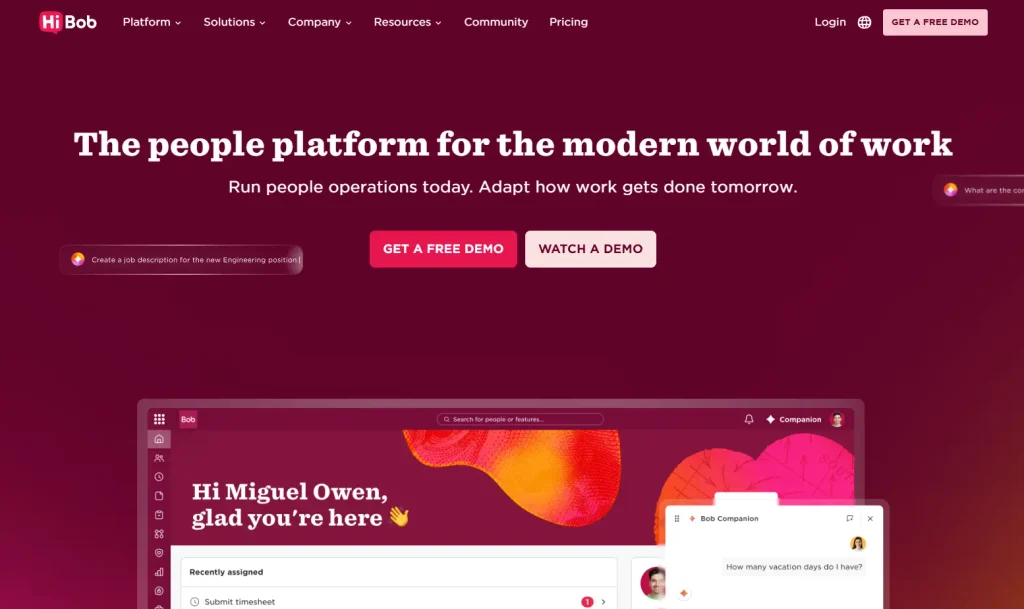
HiBob is another top-rated performance management software for small businesses, offering performance reviews and continuous feedback cycles. Known for its interface and customizable timelines, this tool streamlines performance management, enabling managers to set and track individual and company-wide goals.
What makes it ideal for small businesses:
- Offers customized pricing tailored to small teams, ensuring businesses only pay for the features and users they need.
- Simplifies the review process by structuring feedback, tracking progress, and ensuring evaluations lead to meaningful development.
- Reduces HR workload through automated review cycles, centralized feedback storage, and the elimination of manual tracking.
Pros and Cons:
| Pros | Cons |
| Combines HR and performance management | No public standard pricing |
| Strong people analytics | May offer more features than needed for small companies |
| Suitable for growing organizations | Requires contacting sales for a quote |
Pricing:
- Custom pricing based on company size, selected modules, and requirements. Core HR is included, with additional modules available as add-ons.
4. PerformYard
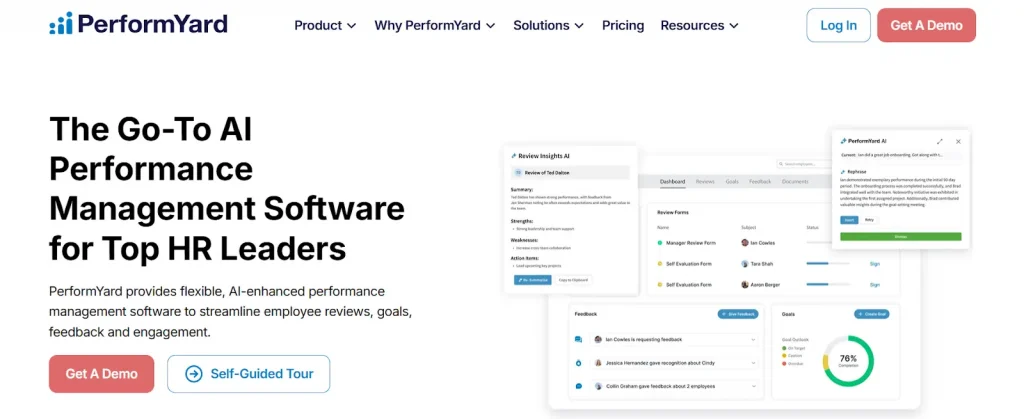
PerformYard offers a performance management software solution that automates the review process and reduces burdens on HR and managers. With features such as goal management, continuous feedback, reporting, analytics, and more than 2,000 clients, PerformYard has emerged as one of the top choices for a performance management system for small businesses in 2027.
What makes it ideal for small businesses:
- Offers enterprise-level capabilities with a simple setup and affordable pricing for smaller teams.
- Flexible review workflows and templates support changing business needs without requiring extensive IT infrastructure.
Pros and Cons
| Pros | Cons |
| Highly customizable review processes | Pricing is not publicly listed |
| Strong performance workflow controls | Requires setup planning |
| Supports ongoing feedback | Limited number of templates |
Pricing
Paid plans: $5–$15/person/month, billed annually, depending on selected products and requirements.
Free trial available
5. Lattice
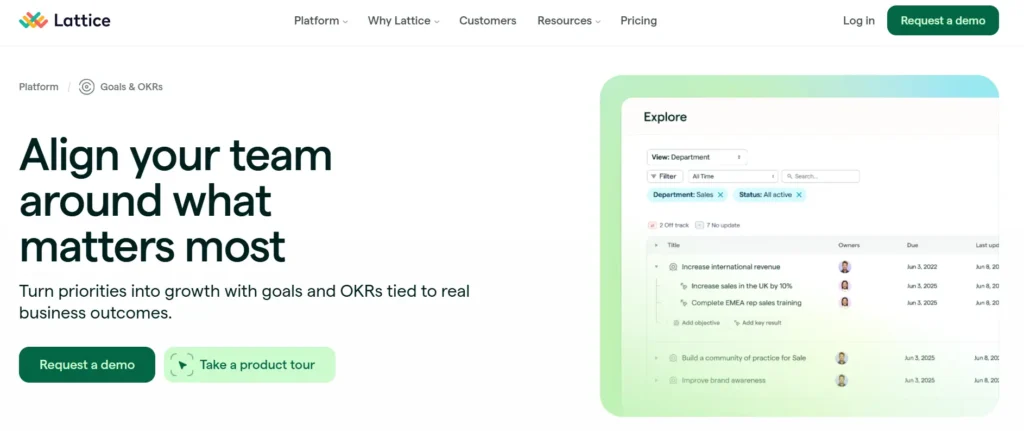
Lattice’s Performance module offers a comprehensive suite of tools, including performance reviews, succession planning, performance improvement plans, real-time check-ins, and development tracking. It provides a full suite of systems for a small business that expects to grow and invest in performance management.
What makes it ideal for small businesses:
- Enables flexible review cycles (annual, quarterly, or project-based) suited to the evolving needs of small organizations.
- Strong goal tracking helps align small-team efforts with business strategy.
- Robust people analytics and insights allow small business leaders to make data-driven decisions.
- Small businesses can start with essential features and expand into more advanced ones as needed.
Pros and Cons
Pros and Cons
| Pros | Cons |
| Helpful support team | Steep learning curve |
| Transparency and ease of use | Not user-friendly |
| streamlined goal-setting | Difficult usability |
Pricing
- Starts at $8/user/month, with add-ons from $4/user/month for Engagement, Growth, and other features.
6. Effy AI
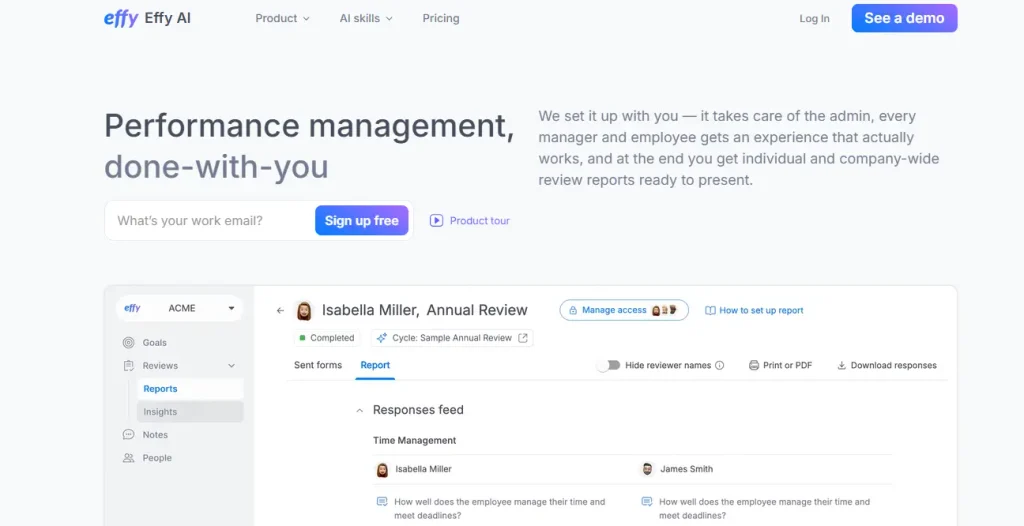
Effy AI is an AI-powered performance management software that can transform how small companies handle performance reviews.Its advanced analytics feature cuts review time by up to 70% and improves feedback quality by 20-30%.
What makes it ideal for small businesses:
- Unlike enterprise platforms that demand extensive training, Effy AI is ready to use from day one.
- Effy AI offers unlimited reviews for up to five employees at no additional cost, with no time limits or hidden fees.
- The platform provides advanced, enterprise-grade insights to small businesses without the complexity of large-scale HR systems
Pros and Cons
| Pros | Cons |
| Comprehensive features | Integration Issues |
| Easy implementation | Limited third-party integrations |
| Customization ability | Lacks deep configurability for complex review cycles |
Pricing
- Free plan: Available
- Paid plans: Start at $3/seat/month, billed annually. Goals & OKRs are available at $2/seat/month.
7. BambooHR Performance Management System
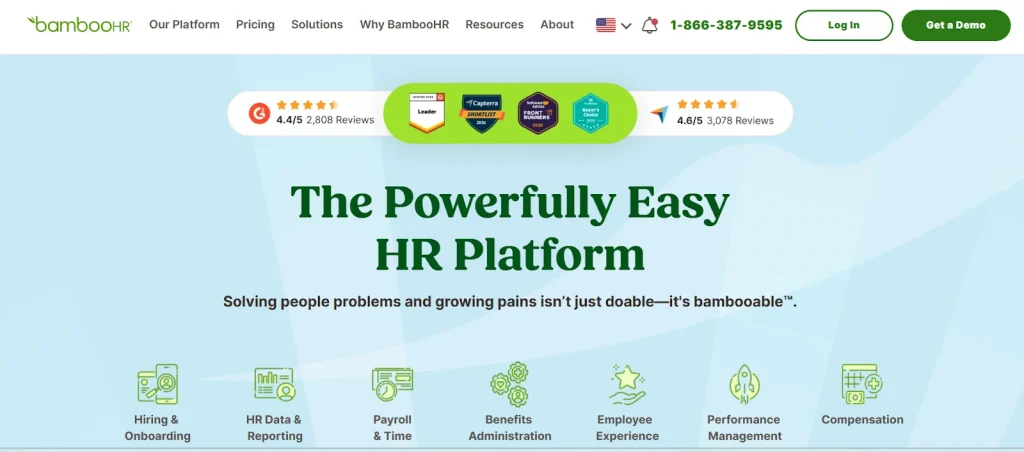
BambooHR’s Performance Management offering simplifies employee assessments, feedback, and goal-setting across HR, business leaders, and employees. The platform automates review schedules, data collection, and follow-ups, while emphasizing a people-centered culture through meaningful relationships and growth.
What makes it ideal for small businesses:
- Automates key tasks like scheduling, reminders, and data collection to free up HR resources.
- Designed to support a more manageable performance cycle rather than complex enterprise models.
- Integrates performance with broader HR/people data—useful for growing small businesses.
- User-friendly interface and shorter review forms help ensure higher completion and engagement.
Pros and Cons
| Pros | Cons |
| User-Friendly Interface | Limited Options |
| Ease of Use | Limited Customization |
Pricing
- Free trial
- Core starts at $10/employee/month
- Pro at $17/employee/month
- Elite at $25/employee/month
8. 15Five
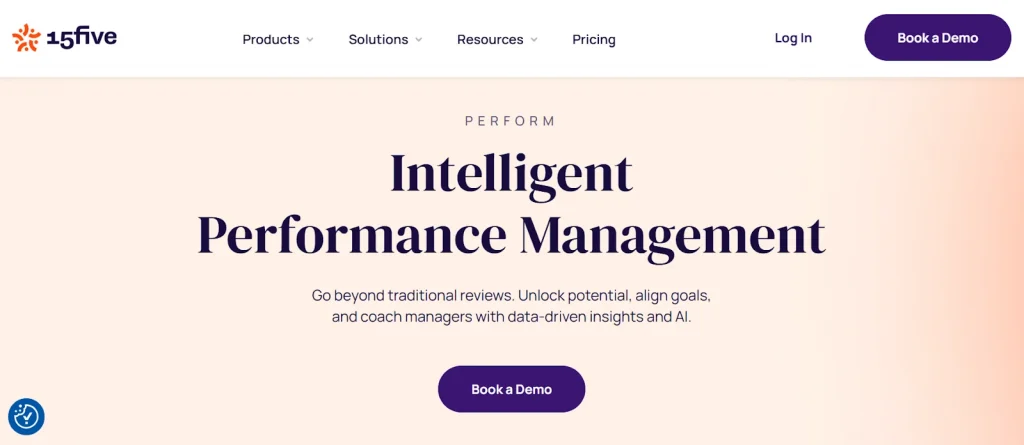
15Five is an all-in-one performance management platform that provides HR leaders with a system of action to drive performance, engagement, and employee development. Its “Perform” product supports review cycle setup, continuous feedback, goal tracking, and integrates with HRIS for automation.
What makes it ideal for small businesses:
- Enables review-cycle setup in as little as 15 minutes — great for small teams.
- Focus on regular feedback and engagement rather than just annual reviews, aligning with modern small-business culture.
- It is affordable and scalable, and designed for HR leaders of small businesses managing growth.
- Lightweight yet full-featured enough to evolve as the business expands.
Pros and Cons:
| Pros | Cons |
| Goal setting | Reporting issues |
| AI-assisted performance reviews | Limited features |
| Good combination of engagement, reviews, and feedback | Limited customization |
Pricing:
- Free trial available
- Paid plan includes Engage – $4/user/month; Perform – $11/user/month; Total Platform – $16/user/month, billed annually
Why does your small business need a performance management system?
Small companies often face tighter deadlines, increasing competition, and pressure to stay productive with lean teams. As a result, leaders need real-time visibility into goals, progress, and performance. A modern performance management system streamlines the process and ensures transparency. Here are the key reasons why small businesses need a performance management system.
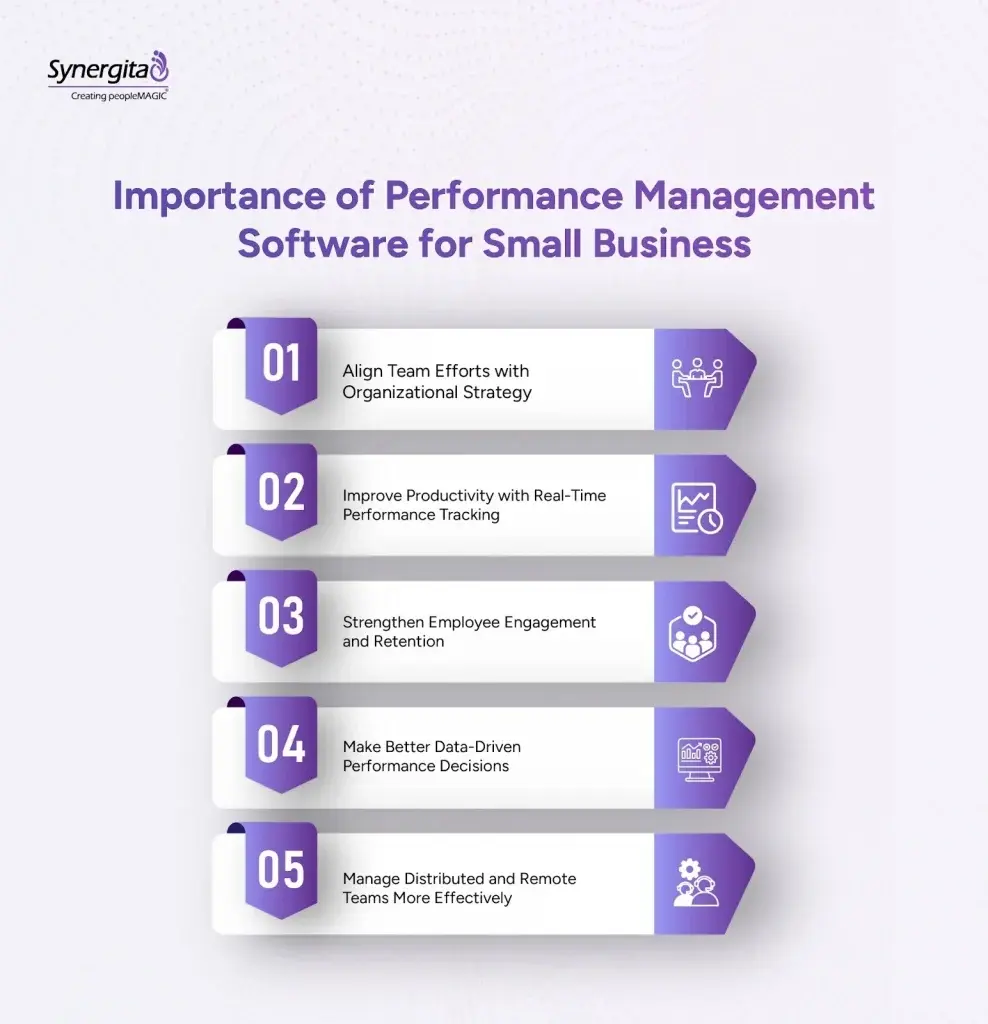
1. Align team efforts with organizational strategy
Performance management software helps in tracking whether every individual’s work is aligned with the company’s strategy. This helps in setting clear performance metrics, improving productivity, and motivating high performance. Research shows that employees whose performance goals are aligned with organisational goals are 3.2 times more likely to be engaged.
2. Improve productivity with real-time performance tracking
Relying on traditional annual reviews is not sufficient in fast-moving and competitive business environments. A performance management system helps in real-time tracking and provides continuous visibility into goals, deadlines, and deliverables. This allows managers to respond quickly and remove bottlenecks, ensuring optimized productivity. This level of agility ensures that work does not stall and employees stay focused on the right priorities, which is critical for small businesses.
3. Strengthen employee engagement and retention
Employee engagement is a growing concern for businesses. In 2024, only 31% of U.S. employees were engaged, indicating a major risk for organizations.. Moreover, various studies have shown that employees who receive regular, meaningful feedback have higher engagement levels and are significantly more likely to remain with their employer.
Also Read: Top 5 Employee Retention Strategies
4. Make Better Data-Driven Performance Decisions
A performance management system provides meaningful data with actionable insights. It helps leaders identify high-potential employees, skill gaps, training needs, and patterns of underperformance. By centralizing performance data, businesses gain visibility that they cannot get from other methods.
5. Manage Distributed and Remote Teams More Effectively
With the rapid transformation of workplaces, including hybrid models, remote working, and frequent market shifts, tracking productivity and performance and providing timely feedback has become increasingly challenging. Businesses now need a system that offers structured workflows, automated reminders, remote check-ins, and transparent dashboards. This helps HRs and managers maintain accountability, prevent communication gaps, and ensure that employees stay aligned with priorities.
Essential checklist when selecting a performance management system for small businesses
When comparing performance management systems for small businesses, assess whether each platform provides the features your team needs. Here is a checklist of the essential factors every small business must consider.
- Goal setting and alignment features: Ensure the software enables teams to set individual, departmental, and company-wide goals with transparent progress tracking.
- Continuous Feedback and Check-ins: Small teams need frequent performance conversations, not just annual reviews. Look for features that support ongoing feedback, 1:1 check-ins, and real-time updates.
- Easy-to-Use Interface: Ensure the tool is intuitive, requiring minimal training, so that professionals with limited technical expertise can use it effectively.
- Automated Performance Reviews: The system should eliminate manual spreadsheets by automating review cycles, reminders, competency mapping, and rating workflows.
- 360-Degree Feedback Capabilities: Verify that peers, managers, and cross-functional teams can provide feedback to ensure more comprehensive and accurate performance reviews.
- Customizable Performance Templates: Since every company reviews performance differently, ensure the software allows for customizable forms, rating scales, and performance criteria.
- Integrations with HR and Productivity Tools: Seamless integration with HRMS, Slack, Teams, payroll, or project management tools saves time and improves data accuracy.
- Data Analytics and Reporting: Choose a platform that provides dashboards, productivity trends, and insights on performance to make data-driven decisions.
- Scalability and Flexible Pricing: Small businesses require scalable software that can support a growing number of users and offer flexible pricing plans with upgrade options.
- Security and Compliance: Evaluate the security features and ensure the software adheres to compliance standards, such as the General Data Protection Regulation (GDPR) and the California Privacy Rights Act (CPRA).
Final Takeaway
A modern performance management system is a strategic growth driver for small businesses. It helps companies improve accountability, enhance productivity, simplify performance reviews, and provide leaders with the data they need to make informed decisions.
With compact teams, tight deadlines, and increasing competition, a performance management system for small businesses delivers clarity, transparency, and measurable improvement without any complexity.
The top eight PMS tools we discussed are ideal for small companies. Among them, Synergita PMS stands out due to its affordable pricing, usability, and customization features. Try Synergita Performance Management Software free for 7 days and see how it works.
Frequently Asked Questions
Traditional reviews are usually conducted once a year and rely on subjective opinions. On the other hand, a performance management system provides regular feedback, real-time visibility, and objective goal tracking, which enables small businesses to make informed decisions at any time, not just during reviews.
Most performance management tools, including Synergita PMS, integrate with HRIS, payroll, learning systems, and productivity tools like Slack, Teams, or project management platforms, which allows seamless access to data and reduces manual work.
Yes, Synergita uses end-to-end encryption, role-based access control, secure cloud hosting, and GDPR-compliant data policies to protect performance information.
Yes, Synergita allows continuous feedback, manager reviews, self-reviews, and 360° multi-dimensional evaluations, which help in structured feedback and review.
Yes, with Synergita, you can define your own KPIs, review forms, rating scales, and workflows based on your internal review process.
Performance management software pricing depends on employee count, features, and deployment needs. Most platforms offer customized pricing. Synergita offers plans starting at $2 per user per month, with pricing varying based on selected features and business requirements.
